10 Steps to Launching an Online Business
Feeling overwhelmed by the idea of starting an online business? This guide simplifies the process with 10 essential steps for launching a marketing business from home, free from the usual confusion and pressure. Get a clear plan you can follow!
ONLINE INTERNET BUSINESS
Veronica from Build and Sell Digitalshop
1/8/20266 min read
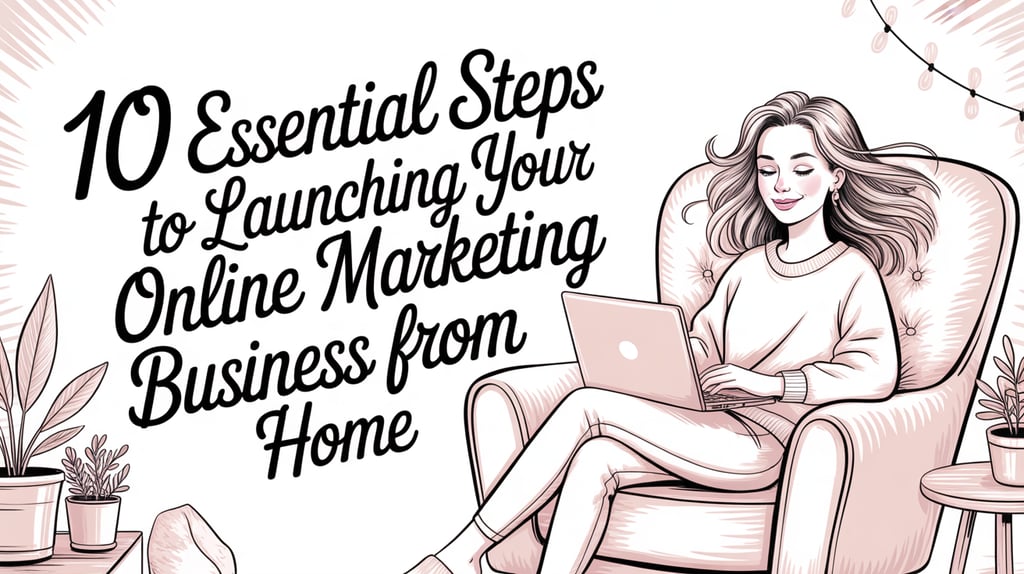
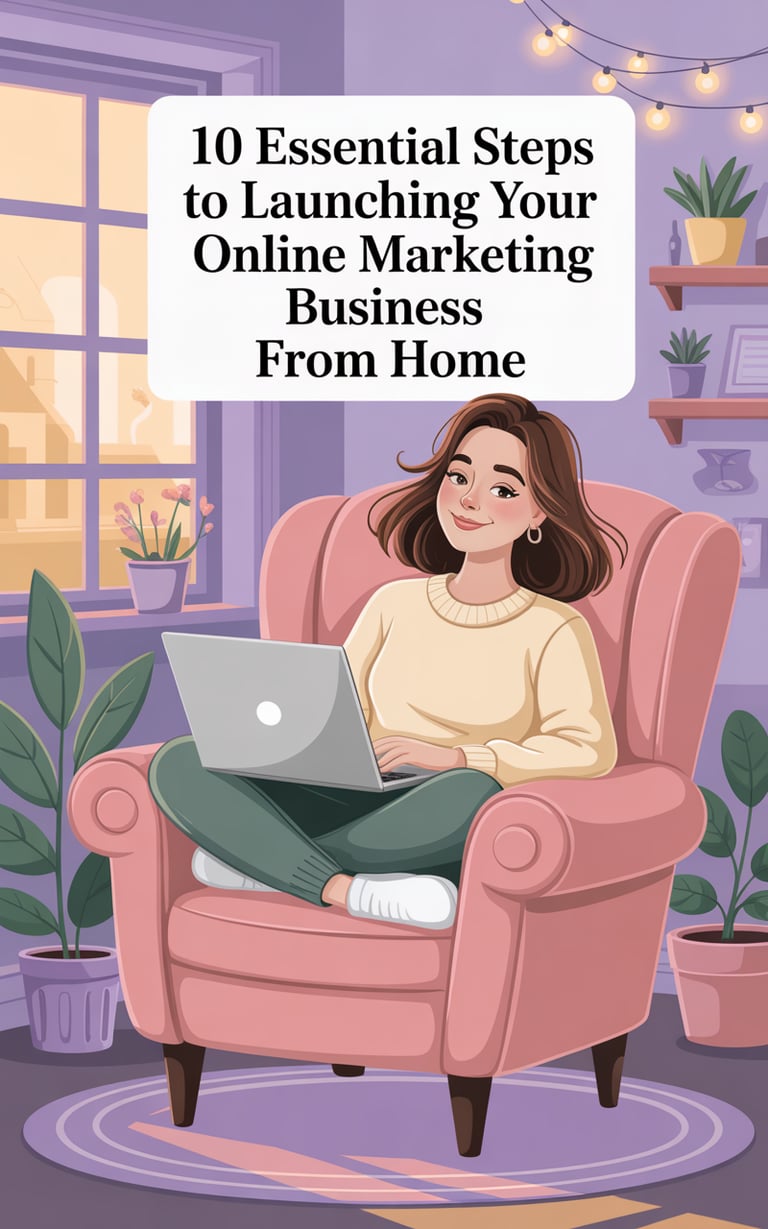
10 Essential Steps to Launching Your Online Marketing Business from Home
(The No-Fluff Roadmap First-Timers Actually Follow)
Let me guess.
You searched “how to start an online marketing business from home” because you’re serious… but not drink-the-Kool-Aid serious. You want something real. Something that doesn’t start with “just manifest it” or end with a $997 upsell disguised as motivation.
Good. You’re in the right place.
This is the roadmap I wish someone had handed me before I lost weeks to overthinking, shiny tools, and advice that sounded impressive but went nowhere. We’re doing this clean, calm, and in the right order—so you can stop circling and actually move.
I’m talking to you, by the way. Not “everyone.” Just you.


What Is an Online Marketing Business (And What It Is Not)
Before we build anything, we need to clear the fog. Because half the confusion around online marketing comes from people using the term to describe wildly different things.
Online Marketing vs. Side Hustles vs. Influencer Income
An online marketing business is not:
Randomly posting content and hoping something sticks
Chasing trends like it’s your full-time cardio
Waiting for a platform to “pick” you
That’s not a business. That’s gambling with Wi-Fi.
An online marketing business is:
Helping a specific person solve a specific problem
Using digital channels (content, email, platforms) intentionally
Getting paid because the value is clear
Side hustles trade time for money. Influencers trade attention for sponsorships.
Marketing businesses trade clarity for leverage.
Different game. Better rules.
Service-Based, Product-Based, and Hybrid Models
Most beginners land in one of these three lanes:
Service-based: You offer a skill (content, email, ads, setup, strategy). Faster cash, more hands-on.
Product-based: You sell something digital. Slower at first, scalable later.
Hybrid: Services now, products later. Honestly? This is where a lot of sane people start.
None of these are “better.” They’re just different timelines wearing the same internet outfit.
Common Myths Beginners Fall For
Let’s kill these early:
“I need a big audience first.” (You don’t.)
“I need to be passionate.” (You need to be clear.)
“I need to know everything.” (You need to know one thing well enough.)
Most people don’t fail because they aren’t smart.
They fail because they start with fantasy instead of structure.


Step 1 – Choose a Profitable Marketing Focus (Without Overthinking)
This is where people freeze… so let’s not do that.
Niches vs. Problems vs. Outcomes
Instead of asking, “What niche should I choose?”
Ask, “What problem can I help solve?”
Compare these:
“I help small businesses.” (Too foggy.)
“I help local service businesses get more leads online.” (Now we’re talking.)
Problems create demand. Demand creates money.
Everything else is decoration.
Beginner-Friendly Marketing Skills That Sell
You do not need rare genius skills. You need useful ones.
Things beginners successfully monetize all the time:
Email marketing
Social media content strategy
Lead generation
Basic funnels
Simple copywriting
You’re not trying to be the best. You’re trying to be helpful and clear.
Why Clarity Beats Passion (Every Time)
Passion shows up after progress, not before it.
Clarity gives you progress.
Progress gives you confidence.
Confidence makes things feel “fun.”
Reverse the order and you stall.
Step 2 – Define Your Ideal Customer Before You Create Anything
If Step 1 is what, this step is who. And skipping it is expensive.
Audience-First Marketing Foundations
Every decision—content, offers, platforms—gets easier when you know who you’re talking to.
Not “women 25–45.”
I mean:
What are they frustrated about right now?
What have they already tried?
What would “this worked” look like in their own words?
That’s marketing. Everything else is noise.
A Simple ICA Framework for Beginners
You don’t need a 40-page persona doc. Answer these:
Who are they?
What problem are they actively trying to fix?
What hasn’t worked yet?
What outcome do they actually want?
That’s enough to move forward without spiraling.
The Cost of Skipping This Step
When people skip this, here’s what happens:
Content feels vague
Offers don’t land
You start blaming algorithms instead of clarity
It’s not the algorithm. It’s the aim.


Step 3 – Pick a Business Model That Matches Your Life
Your business should work with your life, not against it.
Freelance vs. Digital Products vs. Affiliate Marketing
Quick reality check:
Freelance = faster income, more time involved
Digital products = slower start, more leverage
Affiliate marketing = lower control, platform-dependent
None are wrong. Choosing the wrong one for your situation is.
Time, Income, and Energy Trade-Offs
Ask yourself honestly:
How many hours do I actually have?
Do I need income sooner rather than later?
What kind of energy do I have at the end of the day?
Your answers matter more than trends.
Home-Based Constraints (Kids, Jobs, Energy Levels)
Plans built for “full-time creators with silence and coffee” collapse fast in real homes.
Choose a model you can maintain on your worst week—not your most motivated one.
Step 4 – Set Up Only the Tech You Actually Need
This is where procrastination puts on a productivity costume.
Email List Basics
An email list matters. A complicated setup does not.
You need:
One email platform
One opt-in
One welcome message
That’s it. Anything beyond that can wait.
Website vs. Landing Page vs. Marketplace
You don’t need a full website to start.
You can begin with:
A landing page
A marketplace (Etsy, Gumroad, etc.)
A simple link page
Speed beats perfection here.
Tools Beginners Waste Money On
Common traps:
Fancy software you’re “not ready for yet”
Automations with nothing to automate
Buying tools instead of taking action
If it doesn’t help you validate or earn, pause.
Step 5 – Create a Simple Offer You Can Improve Later
Your first offer is not your legacy. It’s a draft.
Your First Offer Doesn’t Need to Be Perfect
It needs to be:
Clear
Useful
Focused on one problem
That’s it. Polishing comes later.
Minimum Viable Offers (Without the Buzzwords)
Think:
A checklist
A short guide
A template pack
A focused service
Solve one thing. Do it cleanly.
Price Psychology for Beginners
Too cheap feels shaky. Too expensive feels scary.
Start reasonable.
Let feedback—not fear—guide adjustments.
Step 6 – Build Trust Before You Try to Sell
People don’t buy from pressure. They buy from clarity and comfort.
Content That Builds Authority Fast
Authority doesn’t come from sounding smart.
It comes from explaining things clearly.
Teach what you’re learning. Share what’s working. Be honest about what’s not.
Visibility Without Burnout
You don’t need five platforms.
Pick one. Show up consistently.
Consistency beats bursts of motivation every time.
Why Consistency Beats Virality
Viral content fades. Reliable content compounds.
Algorithms notice. People remember.
Step 7 – Learn How to Promote Without Feeling Salesy
Selling isn’t manipulation. It’s direction.
Soft Promotion Frameworks
Good promotion:
Names the problem
Shows the solution
Invites the next step
No hype required.
Common Beginner Selling Fears
If you’ve thought:
“I don’t want to bother people”
“What if no one buys?”
“Who am I to sell this?”
Congratulations. You’re human.
Action shrinks fear. Waiting feeds it.
Messaging That Feels Human
Write like you talk.
Explain like you would to a friend.
Clear beats clever. Every time.
Step 8 – Launch Small, Learn Fast
Big launches are optional. Learning isn’t.
Micro-Launch Strategies
Think:
A soft email
A quiet post
A small test audience
You’re not performing. You’re gathering information.
Feedback Loops That Improve Offers
Ask buyers (or almost-buyers):
What confused you?
What helped most?
What would you want next?
They’ll tell you exactly how to improve.
Why “Quiet Launches” Outperform Hype
Less pressure = better feedback
Better feedback = better offers
Simple math.
Step 9 – Create Repeatable Marketing Systems
Systems don’t kill creativity. They protect it.
Content Repurposing Basics
One idea can become:
A post
An email
A short video
A lead magnet
Work once. Use often.
Simple Weekly Workflows
A realistic rhythm:
One content session
One promotion window
One improvement block
That’s enough to build momentum.
Avoiding Burnout
Burnout usually comes from chaos—not effort.
Systems replace chaos.
Step 10 – Scale Only After You Validate
Growth without clarity is expensive.
When to Reinvest
Reinvest when:
Sales are consistent
You know what works
You’re repeating results
Not before.
Scaling Mistakes Beginners Make
Adding complexity too soon
Jumping platforms too fast
Ignoring what’s already working
Boring progress beats dramatic resets.
Sustainable Growth Markers
Real growth looks like:
Predictable income
Clear messaging
Repeat buyers or referrals
Not just bigger numbers—steadier ones.




FAQs (The Questions You’re Probably Asking Quietly)
Do I need a big audience to start?
No. You need clarity and one place to show up consistently.
How long does this take to work?
That depends on focus, not luck. Some see traction in weeks. Others need months. Both are normal.
Can I do this with a full-time job?
Yes—if your plan respects your time and energy.
What if I choose the wrong thing?
You’ll adjust. Nothing here locks you in forever.
Products / Tools / Resources
Here are tools and resources that genuinely support this process without overwhelming you:
Email Platforms: ConvertKit, MailerLite (simple, beginner-friendly)
Landing Pages: Canva websites, Carrd, Leadpages
Marketplaces: Etsy, Gumroad, Stan Store
Content Creation: Canva, Notion, Google Docs
AI Support: ChatGPT (used as a thinking partner, not a crutch)
Learning Support: Beginner-friendly digital product or marketing courses that focus on clarity, not hype
Choose tools that reduce friction—not add pressure.